
How do you get catering clients? Start with the people who order food over and over: nearby offices, schools, medical practices, venues and event planners. Then make yourself easy to find and easy to book. In practice, the fastest way to get catering clients is a mix of direct outreach to local businesses, referral partners (venues, planners, DJs, photographers), a complete Google Business Profile, a catering marketplace listing, and tastings that put your food in front of decision makers. This guide gives you 12 ways to do it, a simple outreach script, and a 30-day plan.
Still setting up the business itself? Start with how to start a catering business, then come back here when you’re ready to book events.
Who actually buys catering (and who to call first)
Before you post a single photo, decide who you’re selling to. Catering buyers fall into a few groups, and they don’t behave the same way:
- Offices and companies. Team lunches, meetings, trainings, client visits. These can repeat every week. ezCater reports from its own survey that 51% of catered meetings happen weekly or more. One good office account can carry your calendar.
- Medical and dental offices. Staff lunches and drug-rep lunches are common, and the office manager usually places the order.
- Schools, churches and community groups. Fundraisers, staff appreciation, banquets, graduations.
- Venues and event planners. Weddings, galas, parties. Fewer events, bigger checks, and they can send you clients for years.
- Private clients. Birthdays, showers, holiday parties, celebrations of life. Mostly word of mouth and Google.
Pick one or two groups to go after first. A drop-off lunch caterer and a full-service wedding caterer need different menus, different pricing and different pitches. If you try to be everything at once, your message gets blurry.
Quick tip: for every target, find the person who places the order. At an office it’s often an office manager, executive assistant or HR coordinator, not the CEO. ezCater makes the same point: identify the person who handles food ordering.

How to get catering clients: 12 ways that work
You don’t need all 12. Pick three or four that fit your buyers and do them every week.
1. Walk in (or email) to nearby offices
Make a list of 30 to 50 businesses within your delivery range. Drop by with a menu and a small tasting box, or send a short email to the office manager. Ask one simple question: “Who orders lunch when you have meetings?” Then follow up. Most catering wins come on the second or third touch, not the first.
2. Get on venue preferred vendor lists
Many event venues keep a list of approved caterers they hand to every couple or event host. Call venues near you, ask what it takes to get on their list, and offer to do a walkthrough or a tasting for their event manager. Bring your insurance certificate and licensing info, since venues often ask for proof. If you haven’t sorted those yet, see catering license and permits.
3. Partner with planners and other event vendors
Wedding planners, DJs, photographers, florists and rental companies all see events before you do. Ask them to coffee, learn what kind of clients they serve, and send referrals their way too. A partner who trusts you will recommend you without being asked.
4. Set up your Google Business Profile
When someone searches “caterer near me,” Google’s local results are where a lot of private clients start. Google says you can add or claim your Business Profile at no charge. Fill in every field: services, service area, hours, real photos of your food and setups, and a link to your catering menu. Then ask happy clients for reviews after every event.
5. Build a simple catering page that makes ordering easy
Your website doesn’t need to be fancy. It needs a clear menu with per-person pricing or package tiers, minimums, delivery area, lead time, dietary options and one obvious way to inquire. Busy buyers want to know fast if you fit their budget and date. ezCater suggests highlighting reliable delivery windows, clear portions, dietary options and individually packaged items.
6. List on a catering marketplace
Marketplaces put your menu in front of people already looking to order. For example, CaterCow says signing up is free, with no sign-up fee or contract, and it takes a percentage of each marketplace order. Its team reviews applications, usually within two business days. ezCater runs a marketplace too. Read each one’s terms and factor the commission into your pricing before you join.
7. Host a tasting for decision makers
Invite office managers, venue coordinators and planners to a short tasting. Keep it small and focused: three or four signature items, your menu, and a booking offer for the next 30 days. Tasting events are one of the most common ways caterers turn “maybe” into booked dates.
8. Post real work on social media
Instagram and Facebook work best when they show the work: setups, trays going out, the line at a buffet, a clean drop-off. Tag the venue and partners (with permission), use your city in captions, and post consistently. Local Facebook groups can also help, as long as you follow each group’s rules on promotion.
9. Show up at markets, fairs and festivals
A booth at a farmers market, food festival or community fair puts your food in front of a lot of locals at once. Bring catering menus and a sign-up sheet. Check your local rules first, since temporary events often need their own permits.
10. Join local business groups
Chambers of commerce, networking groups and business associations are full of people who order lunch for their teams. Offer to cater a meeting. Being the person who fed the room is a strong introduction.
11. Turn every event into the next one
The cheapest client is the one you already have. After each event, send a thank-you, ask how it went, and ask for a review. For offices, offer to put them on a standing order. ezCater also suggests loyalty perks or priority booking for repeat clients.
12. Ask for referrals out loud
People don’t refer you unless you ask. Add a line to your follow-up: “If you know anyone planning an event this season, I’d love an introduction.” Some caterers offer a small thank-you, like a free dessert tray on the next order.
A simple outreach script for offices
Keep it short and friendly. Here’s an email you can adapt:
Subject: Lunch for your next team meeting?
Hi [Name],
I run [Business], a local caterer about [X] minutes from your office. We do team lunches and meeting trays with individually packed options and clear labels for dietary needs.
Could I drop off a free tasting box for your team next week? No strings, just want you to try the food.
Thanks,
[Your name] · [Phone]
If they don’t reply, follow up once a week for two or three weeks with something useful: your menu, a seasonal special, or a note that you have openings on a specific date.
Get your pricing and paperwork ready before the inquiries come in
Here’s the part most new caterers skip. When an office manager or a couple finally asks for a quote, you need to answer fast and get it right. That means you already know your per-person cost, your minimums, your deposit terms and that your license and insurance are in place.
- Price per head. Know your food cost, labor and margin for every menu. Our guide on how to price catering services walks through the formula, and the free catering quote calculator does the math for an event.
- Contract and deposit. Put the date, headcount, menu, payment terms and cancellation policy in writing. Start with our free catering contract template.
- License and insurance. Venues and corporate clients often ask for proof. Rules vary by state and city, so check with your local health department.
That’s a lot of setup on top of the cooking. If you’d rather start with a plan that’s already put together, this is where the Launch Plan helps.
Want this done for you?
The Catering Launch Plan ($29) gives you the Per-Head Cost Calculator so you can quote a client the same day, the business plan template (Word + PDF) to lock in who you’re selling to, and the permits roadmap + permit tracker so you’re ready when a venue asks for paperwork, plus the rest of the plan: Start Here guide with a 2-week plan, launch checklist, Startup Budget Calculator, business structure guide and insurance cheat sheet.
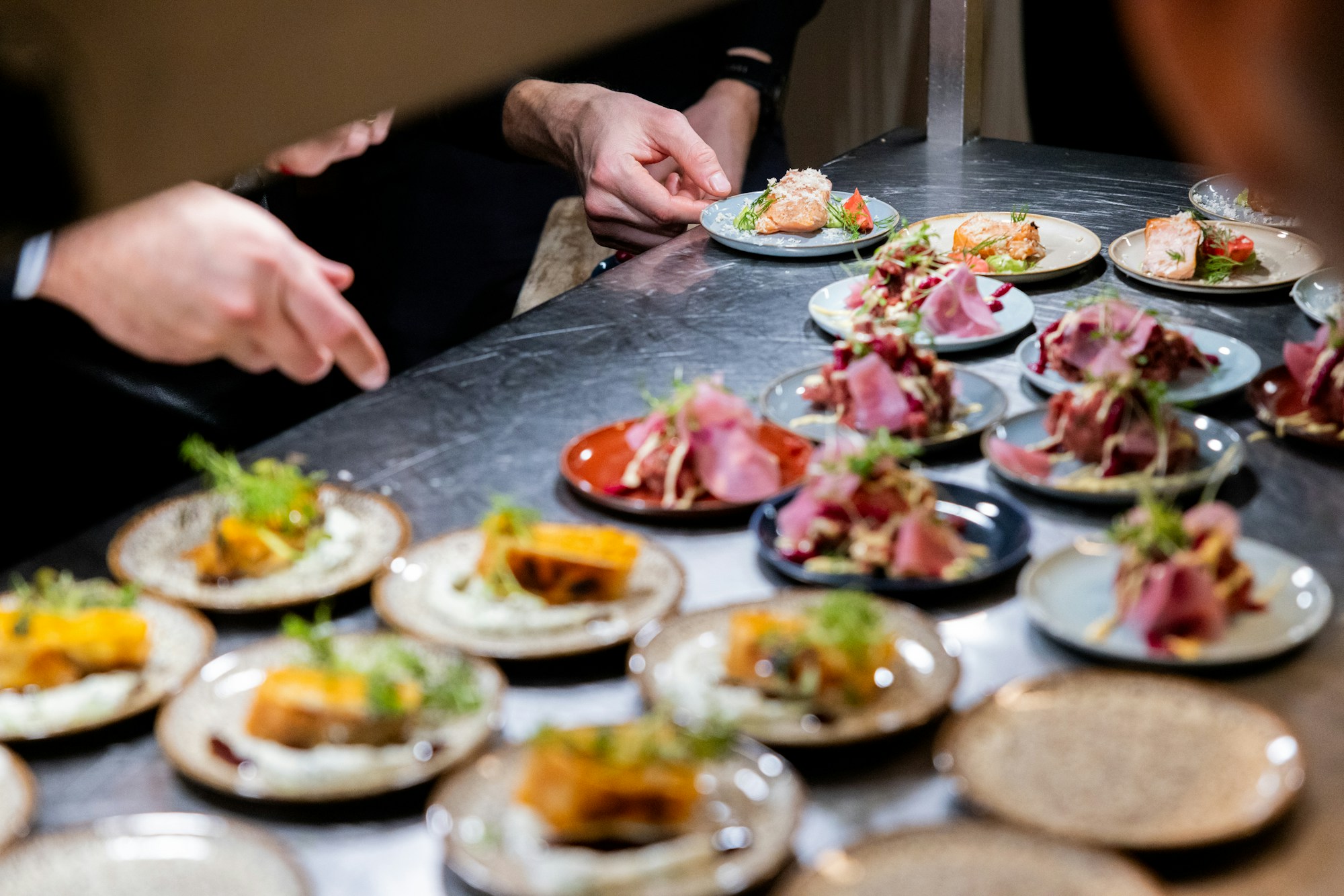
Which channels fit which clients
| Client type | Best ways to reach them | What they care about |
|---|---|---|
| Offices | Walk-ins, email, tasting boxes, marketplaces | On-time delivery, easy ordering, dietary labels |
| Medical offices | Office manager outreach, referrals between practices | Reliability, simple menus, invoicing |
| Venues | Preferred vendor lists, walkthroughs, tastings | Professional setup, insurance, clean breakdown |
| Planners | Coffee meetings, vendor networking, social media | Communication, flexibility, making them look good |
| Private clients | Google Business Profile, reviews, word of mouth | Clear packages, price, a friendly quote |
Your 30-day plan to book your first catering clients
- Week 1: Pick your one or two target client types. Finalize a short menu with per-person pricing and minimums. Set up your Google Business Profile.
- Week 2: Build your list: 30 to 50 offices and 10 venues or planners in your area. Put together a tasting box you can make in a batch.
- Week 3: Send the outreach email or walk in. Drop off tastings. Apply to one catering marketplace.
- Week 4: Follow up with everyone. Book a tasting for decision makers. After every order, ask for a review and a referral.
Keep a simple tracker (a spreadsheet works) with each lead, the date you contacted them and the next follow-up. Consistency beats a big one-time push.
Common mistakes that slow down bookings
- No prices anywhere. “Contact us for a quote” on everything makes busy buyers move on. Show starting prices or package tiers.
- Slow replies. Catering buyers often reach out to a few caterers at once. Answer inquiries the same day if you can.
- Saying yes to everything. Taking an event you can’t staff or price well can cost you the review. It’s fine to refer it out.
- No follow-up. One email isn’t outreach. Plan for three or four touches.
- Forgetting past clients. Repeat orders and referrals are often your best source of new business.
Curious what all of this adds up to? See is catering a profitable business for margins, or run your numbers in the free catering startup cost calculator.
Want a head start? Grab the free Catering Starter Kit below.
FAQ
How do I get my first catering client?
Start close to home. Reach out to 30 to 50 nearby offices and a handful of venues, offer a free tasting, and follow up two or three times. Friends, family and past coworkers can also be great first clients, as long as you ask them for a review afterward.
Where do caterers find the most clients?
It depends on the type of catering. Corporate caterers often find clients through direct outreach and marketplaces, since office orders can repeat weekly. Event caterers tend to grow through venue preferred vendor lists, planners and reviews.
Is it worth joining a catering marketplace?
It can be, especially early on. Marketplaces like CaterCow say sign-up is free and they take a percentage of each order they send you. Build that commission into your prices so marketplace orders are still profitable.
How do I get corporate catering clients?
Find the person who orders food, usually an office manager or executive assistant. Send a short email or stop by with a tasting box, make ordering simple, and offer a standing weekly order once they’ve tried you.
How do I get on a venue’s preferred caterer list?
Call the venue and ask what they require. Many ask for proof of insurance and licensing, a menu and a tasting or walkthrough. Then do great work at your first event there, since venues keep caterers who make their events run smoothly.
Your next step
Be ready to quote the minute a client says yes. The $29 Catering Launch Plan gives you the Start Here guide with a 2-week plan, business plan template (Word + PDF), Startup Budget Calculator, Per-Head Cost Calculator, launch checklist, permits roadmap + permit tracker, insurance cheat sheet and business structure guide. 30-day money-back guarantee.
