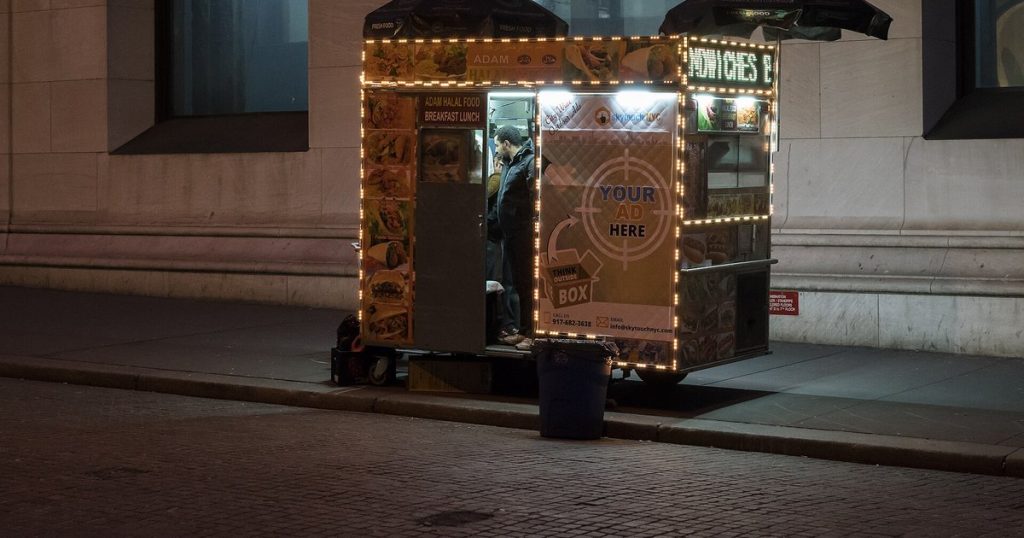
Food truck permits and licenses are the reason most aspiring operators stall before they ever serve a single taco. The truck is the easy part. The paperwork is what kills momentum. Every state writes its own rules, every county adds its own layer, and most cities pile on extras that no one warns you about until you’ve already cashed out for the build.
I spent years running marketing for a national restaurant brand, watching new franchisees lose two and three months at a time to permit chaos. Same story every time. They had the capital, the concept, and the truck. What they didn’t have was a clear list of which permits, in which order, in their specific state.
This is that list. Every food truck permit and license you’ll need in 2026, what each one actually costs, how the rules shift from state to state, and the exact application order so nothing expires while you’re still waiting on something else.
What Food Truck Permits and Licenses Do You Actually Need?
When operators ask “what permits are needed for a food truck,” they’re usually thinking it’s one document. It’s not. It’s a stack of four to seven separate approvals from different agencies, and each one protects something different.
The business license protects the tax authority. The mobile food vendor permit gives you the legal right to sell from a vehicle. The health permit protects your customers. The fire safety permit protects everyone within fifty feet of your propane tank. Skip any one of them and you’re operating illegally — which means a single complaint can shut you down before lunch service.
In nearly every U.S. city, your food truck permits and licenses bundle will include some version of these:
Business license. The base registration that makes your LLC or sole proprietorship legal in your city or state. Filed with the city clerk or state business portal.
Mobile food vendor permit. This is the one most people mean when they say “the food truck permit.” It gives you legal authority to operate a mobile food unit in a specific jurisdiction.
Food truck health permit. Issued by the county health department after they inspect your truck and commissary. Renewed annually with random reinspections.
Fire safety permit. Required anywhere you use propane, deep fryers, or open flame. The fire marshal checks suppression systems, tank placement, and emergency shutoffs.
Commissary agreement. Technically not a permit, but almost every jurisdiction requires you to prep and clean at a licensed commercial kitchen. No commissary, no health permit. Our commissary kitchen finder indexes every state so you can see what is available near you before you apply.
Seller’s permit (sales tax ID). Free in most states. Required to collect and remit sales tax. Filed with your state’s department of revenue.
Food handler cards. Required for every person who touches food on your truck. ServSafe is the most common certification and transfers across most states.
Some cities add extras on top. New York City has a permit cap that’s been frozen for decades. Chicago requires a separate two-year mobile food license. Portland mandates quarterly commissary inspections. Los Angeles County wants you to register with each individual city you operate in.
The full bundle, summed up: between $2,500 and $6,500 in first-year permit costs for most operators. Before insurance. Before your truck build. Before your first case of chicken.
What Each Food Truck Permit and License Covers
Here is what each food truck license actually buys you, and the typical range it lands in. Your specific city may sit at either end. For the full sourced breakdown with county-level fee schedules, see our dedicated guide to how much a food truck permit costs.
Business license: $50 to $400 per year. Filed with the city clerk or state portal. Renewable annually. Some states charge a one-time fee; others charge yearly.
Mobile food vendor permit: $100 to $1,500 per year. This is the widest cost range in the entire bundle. Small cities charge $100 flat. Major metros like Los Angeles or San Francisco can charge $1,500+ for a single jurisdiction. New York City permits, when transferable, lease on the secondary market for $20,000+ per year.
Food truck health permit: $150 to $1,000. Set by the county health department. Larger urban counties charge more. Required annual renewal plus random inspections.
Fire safety permit: $75 to $400. Charged by the fire marshal or fire department. Includes inspection of suppression systems, tank placement, and gas shutoffs.
Commissary agreement: $400 to $1,500 per month. Recurring monthly cost — not a one-time permit. The commissary is where you legally prep food, store ingredients, fill water tanks, and clean the truck.
Seller’s permit: Usually free. Required in any state that charges sales tax. Filed online through your state’s department of revenue.
Food handler cards: $10 to $25 per person. ServSafe certification runs $15 in most states. Required for every staff member who handles food.
Stack the one-time and annual fees: between $625 and $4,725 in year-one permit costs, plus $4,800 to $18,000 in annual commissary fees. That’s why “food truck permits cost” is one of the most-searched questions on Google — the numbers genuinely surprise first-time operators.
How Food Truck Permits and Licenses Vary by State
There is no federal food truck permit system. Every state writes its own rules, every county layers its own additions, and every city writes a third layer on top of that. Two food trucks parked twenty miles apart can be operating under wildly different rules.
Here’s how the rules break down by region in 2026.
The Easiest States
Florida. The friendliest state in the country for food trucks. The Department of Business and Professional Regulation issues a single Mobile Food Dispensing Vehicle license that’s valid statewide — roughly $347 per year. County health permits run $150 to $300. Most operators are fully licensed and open within four to six weeks.
Texas. Statewide health permitting is handled through TDSHS. Cities like Austin and Houston are reasonably fast, with mobile food vendor permits running $258 to $500 per year. The catch: you need a separate permit for every city you operate in, so chasing events across the state adds up.
Tennessee. Health permits are county-issued and inexpensive — $200 to $400. Nashville has a clean, well-documented permit process with predictable timelines.
Arizona. Maricopa County (Phoenix) issues permits within two to three weeks. Costs are moderate. State sales tax licensing is straightforward.
The Mid-Tier States
Georgia. Atlanta’s permit process is moderately complex. Health permits run $400 to $600. The city requires proof of commissary, vehicle inspection, and fire marshal sign-off before issuing.
North Carolina. Permits are county-level, with costs varying from $150 in rural counties to $600 in Charlotte and Raleigh.
Colorado. Denver requires both city and county permits. Costs are moderate, but the application timeline can stretch six to eight weeks during peak season.
Ohio. Columbus and Cleveland have well-documented processes. Annual fees around $300 to $500.
The Hardest States
California. Slow and strict. Los Angeles County health permits run $600 to $1,000 per year, plus you need a separate permit from every city you operate in. The state requires specific water tank and wastewater capacities that many cheaper truck builds don’t meet. Average timeline: twelve to sixteen weeks.
New York. The hardest food truck market in the country. New York City has had a permit cap frozen since the 1980s. Existing permits transfer on the secondary market for $20,000 to $25,000 per year. Outside NYC, the state is more reasonable, but the city itself is essentially closed to new operators without buying their way in.
Illinois. Chicago requires a two-year mobile food license, a separate commissary agreement, and a city-specific zoning approval. The city also restricts food trucks from operating within 200 feet of brick-and-mortar restaurants — a rule that effectively bans much of downtown.
Oregon. Portland operates one of the most regulated food truck systems in the country. Quarterly commissary inspections, strict zoning, and an annual licensing renewal that requires re-inspection every time.
If you’re choosing a launch city, research the permit timeline before you commit to the truck. The food truck license cost is one variable. How long you wait to start earning revenue is a much bigger one.
The Right Order to Apply for Food Truck Permits
This is the part almost every guide gets wrong. Each food truck permit has a different processing timeline, and if you apply in the wrong order, the first one expires before the last one is issued. Then you pay twice.
Here’s the application sequence that works for most operators in most states.
Step 1: Form the business entity. LLC or sole proprietorship, depending on your situation. You need a registered business before anything else. Most states issue same-day or within a week.
Step 2: Apply for the seller’s permit and EIN. Both are free. Both are usually issued the same day online. The EIN comes from the IRS; the seller’s permit comes from your state’s department of revenue.
Step 3: Lock in the commissary agreement. Good commissaries have waitlists, especially in major cities. Sign a contract four to six weeks before you need the truck operational. You cannot get a health permit without a signed commissary agreement.
Step 4: Complete food handler certifications. Knock these out online while you wait. ServSafe takes about four hours per person. Get every staff member certified before you need them.
Step 5: Apply for the business license. File with the city clerk or state business portal. Typical processing: two to four weeks. Don’t skip ahead — the health department will ask for your business license number when you submit your health permit application.
Step 6: Schedule the health permit inspection. Now you’re ready. The health department will inspect your truck and commissary together. Schedule this after the truck build is 100% finished, not before. Showing up with an unfinished truck means rescheduling and paying re-inspection fees.
Step 7: Pass the fire safety inspection. The fire marshal inspects propane tank placement, suppression systems, and emergency shutoffs. Schedule after the truck build is final.
Step 8: Apply for the mobile food vendor permit. This is the last one because most cities require all the above as prerequisites. Once issued, you’re legally allowed to operate.
Total timeline if everything moves smoothly: eight to twelve weeks. Realistic timeline for most first-time operators: twelve to twenty weeks.
Common Food Truck Permit and License Mistakes
A few recurring patterns cost new operators thousands of dollars and months of delay. Most are avoidable.
Building the truck before checking state water tank requirements. California, Oregon, and Washington all require minimum fresh water and wastewater capacities that cheaper truck builds don’t meet. Operators routinely fail health inspections because the tanks are too small, then have to retrofit at $3,000 to $8,000.
Forgetting that mobile food vendor permits are city-specific. A permit from Austin doesn’t let you operate in San Antonio. Operators who plan to chase events across a region get blindsided when they realize they need five or six separate permits.
Underestimating commissary costs. The food truck license cost ranges I listed above don’t include commissary fees, which are recurring. Operators who budget $4,000 for “permits” and then learn the commissary is another $1,200 per month often run out of cash in month two.
Applying for the mobile food vendor permit before having the health permit. Most cities require proof of health permit issuance before they’ll process the vendor permit. Applying in the wrong order means waiting in a queue twice.
Letting the business license lapse during build delays. If your truck build runs three months over schedule (and they almost always do), your business license can expire before you ever open. Always file your business license last among the early-stage permits.
What Permits Are Needed for a Food Truck in 2026: A Quick Reference
If you’re scanning this for a city-by-city answer, here’s the simplest summary of what permits and licenses every food truck needs in 2026, regardless of state:
- Federal: EIN (Employer Identification Number) — free, issued by the IRS
- State: business registration, seller’s permit, sales tax license — varies
- County: health permit, food handler certifications — $300 to $1,200 combined
- City: business license, mobile food vendor permit, fire safety permit — $300 to $2,000 combined
- Recurring: commissary agreement — $400 to $1,500 monthly
For state-specific guides, we’ve published detailed walkthroughs for California and Florida. Other states are rolling out monthly.
Frequently Asked Questions
What is the easiest state to get a food truck permit in?
Florida. One Mobile Food Dispensing Vehicle (MFDV) license from the Division of Hotels and Restaurants covers you statewide. The published full-year fee is $347, or $178.50 if you apply within six months of your district’s renewal date, plus a one-time $50 application fee for a new license. Plan review is free. Those are the state’s own posted numbers (Florida DBPR food service fee schedule).
How much do food truck permits and licenses cost in total?
There is no single national number, and anyone quoting you one is guessing. Your total is the stack of the permits above, and it swings on your city more than anything else. Florida posts a flat $347 statewide MFDV fee; a major metro mobile vendor permit alone can run many times that. The commissary agreement is usually the largest recurring line and it is monthly, not annual. We break the costs down against published county and city fee schedules in how much food truck permits cost, and map them state by state on the permit cost map.
How long does it take to get all the food truck permits and licenses you need?
Eight to twelve weeks if everything moves smoothly. Realistically, most first-time operators take twelve to twenty weeks from business formation to open.
Do you need a separate permit for every city you operate in?
In most states, yes. Mobile food vendor permits are usually city-specific, even when health permits are county-issued. Florida is one of the few exceptions with a statewide license.
Can you start operating before all the food truck permits and licenses are issued?
No. Operating without a health permit and a mobile food vendor permit will get you shut down on the spot, and most jurisdictions will issue fines that exceed the cost of the permits themselves.
What happens if your food truck health permit expires?
You must immediately stop operating. Most jurisdictions allow a short grace period for renewal, but a lapsed permit found during a random inspection results in fines and possible suspension of your right to reapply.
The Bottom Line
Food truck permits and licenses are tedious, but they’re not complicated once someone walks you through the right order. The operators who get hung up are the ones who tried to figure it out on the fly, building the truck before they knew what their state required. The ones who plan it backwards — permits first, truck build second — open three months sooner.
If you want the full permit checklist, state-by-state cost breakdowns, and the exact filing templates we use with our coaching clients, the Food Truck Startup Kit includes all of it as part of the launch playbook. It also covers business plan templates, financial models, insurance comparisons, and the marketing plan that gets your first hundred customers in the door. Every one of the business startup kits ships the same permits-and-licensing section built for its own vertical.
For more on what comes after permits, our guides on food truck profitability, food truck insurance, and and how much food truck permits cost cover the rest of the launch sequence.
External references: FDA Food Code, Small Business Administration mobile food vendor guidance.
Get the Free Food Truck Starter Kit
Permit checklist, startup budget calculator, and a printable worksheet. Free, no strings.
