Search “coffee shop menu ideas” and you get two kinds of lists: pretty drinks nobody orders twice, or a wall of 80 items that would bury a two-person crew. Neither one sells. A menu that actually sells is short, fast to make, and built around the handful of items that carry your margin.
This post gives you 30+ coffee shop menu ideas grouped the way a real cafe runs them: espresso classics, signature and seasonal lattes, cold and iced, tea and non-coffee, food and pastries, grab-and-go, and the high-margin add-ons that quietly pay your rent. You will also get the strategy behind a menu that sells and a straight answer on how many items you should actually carry. If you came here specifically for coffee shop food menu ideas, there is a full section on the food side below: what to serve, what each tier costs you to run, and how much food you can add before it drags your blended margin down. Tools, not theory.
What makes a coffee shop menu actually sell
Before the list, understand the game. Coffee has a fantastic gross margin and a thin net margin. A $5 latte costs about $1 in beans, milk, syrup, and a cup, so you keep roughly 80% gross. But rent, labor, and everything else eat most of that before it reaches your pocket. Our free coffee shop menu price calculator runs that math on your own drink: enter what a cup costs you to build and the gross margin you want to hold, and it gives you the menu price. We break the real numbers down in our coffee shop profit margin guide, but the short version: your menu is the biggest lever you control over that spread.
Three things separate coffee shop menu ideas that sell from ones that just look good on a chalkboard:
- Speed. A 90-second drink at $6 beats a four-minute drink at $8. Every extra minute behind the machine is labor cost and a longer line. Fast drinks protect your margin twice.
- Focus. Every item you add is another thing to stock, train, and waste. The best menus repeat a few base ingredients across many drinks so nothing sits in the fridge going bad.
- Attach. The drink pays the bills; the add-on pays you. A pastry, an extra shot, or an oat-milk swap turns a $4.50 ticket into a $7 one without slowing the line. Toast, in its rundown of the most profitable coffee shop foods, points to exactly this: pair every drink with a premade pastry or grab-and-go item to lift the check.
Keep those three in mind and the coffee shop menu ideas below stop being a wish list and start being a plan.
How many items should a coffee shop menu have?
Fewer than you think. A focused board of roughly 15 to 25 drinks and 10 to 15 food items is far easier to execute than an overwhelming wall, and cafes that trim an oversized menu usually hold revenue flat or grow it while cutting labor and waste.
The Restaurant Warehouse recommends a clean rule of thumb in its own list of coffee shop menu ideas: offer three to five options in each category. Five espresso drinks, four pastries, three signature lattes, three cold options. That is enough choice to feel complete and few enough to run clean at 7 a.m. Anchor the board with permanent staples, then rotate one or two seasonal specials so regulars always have a reason to come back.
Start lean. You can always add a hit; pulling a dud after you have bought the inventory is the expensive way to learn. If you are still choosing your concept and buildout, our guide on how to open a coffee shop walks the whole path from lease to launch.
Espresso classics (the non-negotiable core)
These are the backbone of any cafe. They share the same two ingredients — espresso and milk — so they are cheap to stock, fast to pull, and carry that 75 to 80% beverage gross margin. Nail these before you get clever.
- 1. Espresso / doppio. A single or double shot. Tiny footprint, near-pure margin, and the base for almost everything else on the board.
- 2. Americano. Espresso and hot water. Costs pennies, sells for $3 to $4, and takes 30 seconds. One of the highest-margin drinks you make.
- 3. Cappuccino. Equal parts espresso, steamed milk, and foam. The classic every barista is judged on.
- 4. Latte. Your volume king. Most customers default here, so make it flawless and use it as the canvas for flavors and alt-milk upsells.
- 5. Flat white. Silky microfoam, less foam than a latte. Signals you take coffee seriously and lets you charge a touch more.
- 6. Cortado / macchiato. Small, strong, milk-forward. Cheap to make and loved by regulars who know their coffee.
Signature & seasonal lattes (where the money is)
Signature drinks are how you stop competing on price. A house latte nobody else has justifies a premium and becomes the thing people photograph and tag. The Restaurant Warehouse notes these premium drinks typically price 15 to 30% above your standard offerings — real margin, straight to the bottom line. Anchor two or three permanent signatures, then rotate seasonals to keep the board fresh.
- 7. Vanilla or caramel latte. The gateway flavor drink. In-house syrup keeps the cost down and the margin up.
- 8. Mocha. Espresso, chocolate, steamed milk. A dessert-adjacent crowd-pleaser that sells year round.
- 9. Brown sugar cinnamon latte. Cozy, cheap to build, and reads as “craft” without exotic ingredients.
- 10. Lavender or honey latte. A small floral or honey note makes a standard latte feel like a signature. Low cost, high perceived value.
- 11. Pumpkin spice latte (fall). The seasonal that prints money every autumn. Run it hard September through November.
- 12. Peppermint mocha (winter). The holiday counterpart. Seasonal specials build anticipation and pull people in.
- 13. Maple or brown butter latte (winter). A warmer, grown-up seasonal for guests who find pumpkin spice played out.
Cold & iced drinks (the fastest-growing category)
Cold coffee is no longer niche — it is expected, and it may be the smartest margin play on your board. Cold brew is batch-made in advance, so it carries almost zero per-cup labor: you pour and hand it over. That is the highest labor-adjusted margin in the shop.
- 14. Cold brew. Steeped 12 to 24 hours, batched by the gallon. Smooth, low-acid, and basically free labor once it is made.
- 15. Nitro cold brew. Cold brew on tap, infused with nitrogen for a creamy head. The Restaurant Warehouse notes the equipment justifies a price 20 to 30% above standard cold brew.
- 16. Iced latte. Same build as a hot latte, no steaming. Fast and reliable all summer.
- 17. Cold foam / sweet cream cold brew. A splash of cold foam turns a $4 cold brew into a $5.50 one for pennies of cream and sugar.
- 18. Iced matcha or iced chai. Non-coffee cold options catch the customer who came in with a coffee drinker but does not want coffee.
- 19. Frappe / blended. Blended, sweet, and dessert-like. Slower to make, but a strong afternoon and warm-weather seller at a premium price.
Tea & non-coffee drinks (never lose the non-coffee guest)
Someone in every group does not drink coffee. If you have nothing for them, you lose the whole table. These items are cheap to stock and keep the whole party walking through your door.
- 20. Chai latte. Spiced tea and steamed milk. Huge margin on a concentrate or house blend, and a loyal following.
- 21. Matcha latte. Whisked green tea and milk. Trendy, photogenic, and premium-priced.
- 22. Hot tea selection. A rack of quality loose-leaf or bagged teas. Near-zero labor, near-pure margin.
- 23. Hot chocolate. Your kid and non-coffee-drinker anchor, and a winter volume driver.
- 24. London fog or golden (turmeric) latte. Earl Grey with vanilla, or turmeric and spices. Wellness-flavored, low cost, easy premium.
Food & pastries (the attach that lifts every ticket)
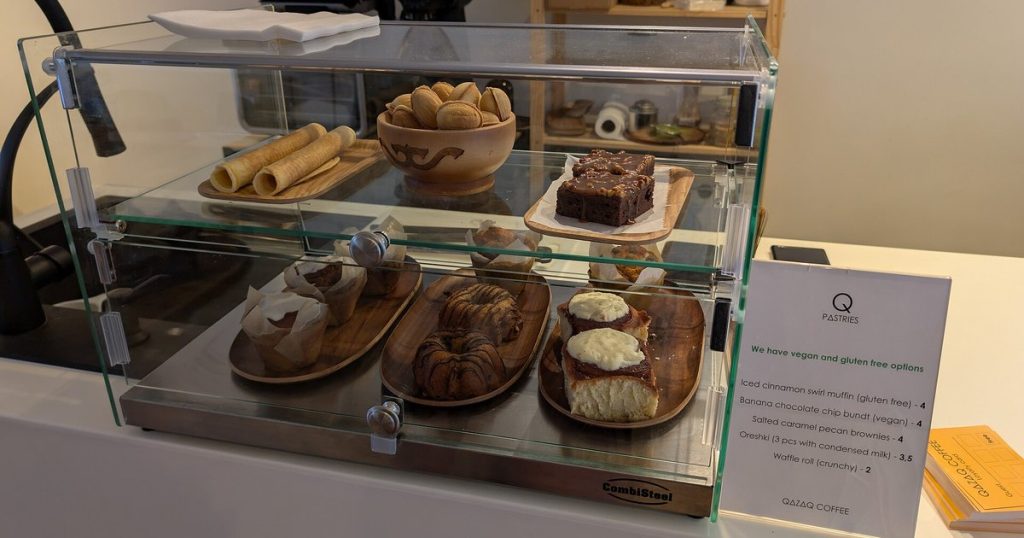
Food is what turns a coffee stop into a meal, and pastries pair so naturally that a well-lit case near the register sells itself on impulse. Food runs a lower margin than drinks — often the 50 to 65% range — but it drives traffic and lifts the average check. The Restaurant Warehouse suggests pricing pastries at a 40 to 60% margin above cost. You do not need a full kitchen; a good local baker and a panini press cover most of this.
- 25. Croissants & morning pastries. The default coffee companion. Source from a great local baker and mark up hard.
- 26. Muffins & scones. Cheap to buy or bake, long shelf life, and easy grab-and-go.
- 27. Avocado toast. High perceived value, simple build, and one of the strongest morning food sellers going.
- 28. Breakfast sandwich. Egg, cheese, and a bagel or croissant. A genuine meal that pushes your ticket well past the coffee.
- 29. Bagels with spreads. Toast-and-serve simplicity, minimal waste, and endless topping upsells.
- 30. Panini or lunch wrap. Extends you into the lunch daypart so the espresso machine is not your only earner after 11 a.m.
Coffee shop food menu ideas: building the food side without killing your margin
Most coffee shop food menu ideas fail for the same reason: they are drink thinking applied to food. A latte is one machine, one person, ninety seconds. A breakfast sandwich is a second piece of equipment, a second prep list, a second set of health-code problems, and a shelf life measured in hours. Food is worth doing. It just has to be planned as its own menu instead of bolted onto the drink board.
Start with the number that decides everything else. Bellwether Coffee’s 2026 margin breakdown puts a wholesale pastry at a 50% gross margin ($3.50 sell price on $1.75 cost) against 76% for a latte and 87% for cold brew. Bake that same pastry in-house and it climbs to 71%. A breakfast sandwich lands at 57% and a lunch salad at 54%. Nothing on the food side beats a drink, so every food item you add has to earn its slot by pulling in a guest you would not otherwise get, or by lifting a ticket you already have.
That is why the mix matters more than the items. The same breakdown models a coffee-focused shop at 85% beverage and 15% food holding a 72% blended margin, a balanced 70/30 shop at 68%, and a food-heavy 55/45 shop at 63%. Nine points of blended margin is the difference between a comfortable year and a tight one. Pick the mix you want first, then build the coffee shop food menu to fit it.
What food to serve in a coffee shop, ranked by how hard it is to run
- Tier 1 — case only, no kitchen. Croissants, muffins, scones, cookies, loaf cakes, biscotti. Delivered by a local baker, loaded into the case, sold. No new equipment, no cook, no ticket time. This is the entire food menu at a lot of profitable cafes, and there is nothing wrong with stopping here.
- Tier 2 — one press and one toaster. Avocado toast, bagels with spreads, grilled paninis, quesadillas. A panini press and a toaster are the only additions. Prep is cold, assembly is fast, and you get a real lunch daypart out of it.
- Tier 3 — an actual cook line. Sandwiches cooked to order, egg bites, hot bowls, plated lunch. Now you need a hood, a cook, a food-safety program, and a proper walk-in. The margin is survivable; the complexity is what sinks people. Do not start here.
A workable small coffee shop menu on the food side is roughly ten to fifteen items: six or seven Tier 1 pastries, three or four Tier 2 builds, and one or two grab-and-go items. That reads as a full coffee shop food menu on the board without adding a second business to the one you are already learning to run.
Coffee shop breakfast menu vs lunch: pick the daypart you can win
Breakfast is the easy half. Your guests are already standing there at 7 a.m. with a drink in hand, so a pastry or a sandwich is a two-second ask at the register. A coffee shop breakfast menu of pastries, toast, bagels, and one hot sandwich covers almost all of it.
Lunch is a decision, not an addition. It means a second prep block, a second inventory, a second waste risk, and someone on the clock through the 11-to-2 window whether anyone walks in or not. Run it against your own rent and payroll before you commit. Our free coffee shop break-even calculator shows how many lunch tickets a day it takes to justify the second kitchen, and our guide to coffee shop menu prices covers what to charge once you open it.
How to price the food side
Price food with the same discipline you price drinks, not off whatever the bakery invoiced you. Keep total cost of goods inside the 25% to 35% of revenue band Bellwether flags as healthy and treat anything past 40% as a problem to fix rather than a cost to absorb. Then check the food half on its own: if a Tier 2 build is not clearing roughly 55%, either the price is wrong or the recipe is.
Planning a full coffee shop food menu?
Grab the free Coffee Shop Starter Kit. It walks you through the launch decisions behind the menu — concept, costs, and the numbers your food mix has to clear — before you commit to a single piece of equipment.
Get the Free Coffee Shop Starter Kit
Menu and margin cheat-sheet, startup budget calculator, and a printable worksheet. Free, no strings.
Grab-and-go & high-margin add-ons (the quiet profit)
This is the category most first-time owners underrate. Grab-and-go items sell with zero barista labor, and add-ons cost pennies while lifting the ticket every single order. Toast specifically calls out bottled cold brew, smoothies, and premade pastries among the most profitable coffee shop foods precisely because they move fast with little labor.
- 31. Bottled cold brew. Batch it, bottle it, sell it off the shelf. Speeds up the rush and sells while your baristas make other drinks.
- 32. Overnight oats & yogurt parfaits. Made ahead, grab-and-go, healthy-halo pricing. Almost no line-time cost.
- 33. Cookies, energy bites & protein snacks. Impulse buys at the register that ride along on nearly every order.
- 34. Extra espresso shot. The purest add-on there is. Costs you cents, adds $0.75 to $1, and takes no extra time.
- 35. Alt-milk swap (oat, almond, coconut). A $0.50 to $0.75 upcharge on a swap customers actively want. Stock oat milk especially.
- 36. Retail beans & merch. Sell your beans by the bag and a branded mug or two. Retail margin plus free advertising walking out the door.
Protect your margins: the strategy behind the list
Not financial advice — every cafe’s costs are different, so run your own numbers before you price anything.
Ideas are the easy part. Making them profitable is the work. A few rules to hold the line:
- Repeat your ingredients. The best coffee shop menu ideas share a base. Espresso, milk, one or two syrups, and cold brew concentrate should build most of your board. Fewer SKUs means less waste and less to count.
- Make syrups and cold brew in-house. House-made syrups and batched cold brew squeeze out margin a distributor never will, and they double as a differentiator.
- Price for perceived value, not just cost. A signature drink in a nice cup with latte art justifies a premium the same espresso in a plain paper cup cannot. Presentation is margin.
- Engineer the board. Put your high-margin, fast-to-make drinks where the eye lands. Bury the slow, low-margin stuff or cut it.
- Watch labor. Labor is usually your single biggest cost, often 25 to 35% of revenue. A drink that ties up a barista for four minutes at rush is quietly expensive no matter what it costs in beans.
Want to see how a specific menu plays out against real rent and payroll? Plug your numbers into our free coffee shop startup cost calculator, and if you are still speccing your build, the coffee shop equipment list shows what it takes to actually make everything above.
Build your menu and your numbers in one place
The Coffee Shop Startup Kit gives you the budget and drink costing tools to price every item above against your real rent, labor, and target margin — before you sign a lease or print a single menu board.
Prefer to start free? The free Coffee Shop Starter Kit covers the launch basics before you pay for anything.
Frequently asked questions about coffee shop menu ideas
How many items should be on a coffee shop menu?
Aim for roughly 15 to 25 drinks and 10 to 15 food items, using a three-to-five-options-per-category rule. A focused menu is easier to run, wastes less, and often sells as much or more than a sprawling one because your crew can execute it fast and consistently.
What are the most profitable items on a coffee shop menu?
Drip coffee, americanos, and cold brew top the list because ingredient cost is tiny and prep is fast — beverages routinely run a 75 to 80% gross margin. Add-ons like extra shots, flavor syrups, and alt-milk swaps are close behind since they cost pennies and lift the ticket with no extra labor.
What food should a coffee shop sell?
Start with pastries that pair naturally with coffee — croissants, muffins, scones — then add higher-ticket items like avocado toast, breakfast sandwiches, and lunch paninis to reach across dayparts. Food runs a lower margin than drinks but drives traffic and raises the average check.
What non-coffee drinks should a cafe offer?
Always cover the non-coffee guest so you never lose a group. Chai lattes, matcha, a quality hot tea selection, hot chocolate, and a wellness option like a London fog or golden latte are cheap to stock and high-margin.
What should be on a coffee shop food menu?
The best coffee shop food menu ideas start with pastries you buy rather than bake — croissants, muffins, scones, cookies — then add three or four assembled items like avocado toast, bagels, or paninis that need nothing more than a toaster and a press. Ten to fifteen food items is plenty. Keep food under about 30% of your sales mix so your blended margin stays near 70%, and only build a cook line once lunch is proven.
How do I make my coffee shop menu more profitable?
Keep it small, repeat ingredients across drinks, make syrups and cold brew in-house, and price for perceived value rather than cost alone. Then engineer the board so your fast, high-margin drinks get the attention. Model it against your real rent and labor before you commit — see our coffee shop profit margin breakdown for the benchmarks.
Ready to turn these coffee shop menu ideas into a plan?
Great menu ideas are step one. The Coffee Shop Startup Kit hands you the budget, drink costing and pricing tools to build a menu that actually pays your rent, plus the launch checklist. Tools, not theory.
Get the Free Coffee Shop Starter Kit
Menu and margin cheat-sheet, startup budget calculator, and a printable worksheet. Free, no strings.
