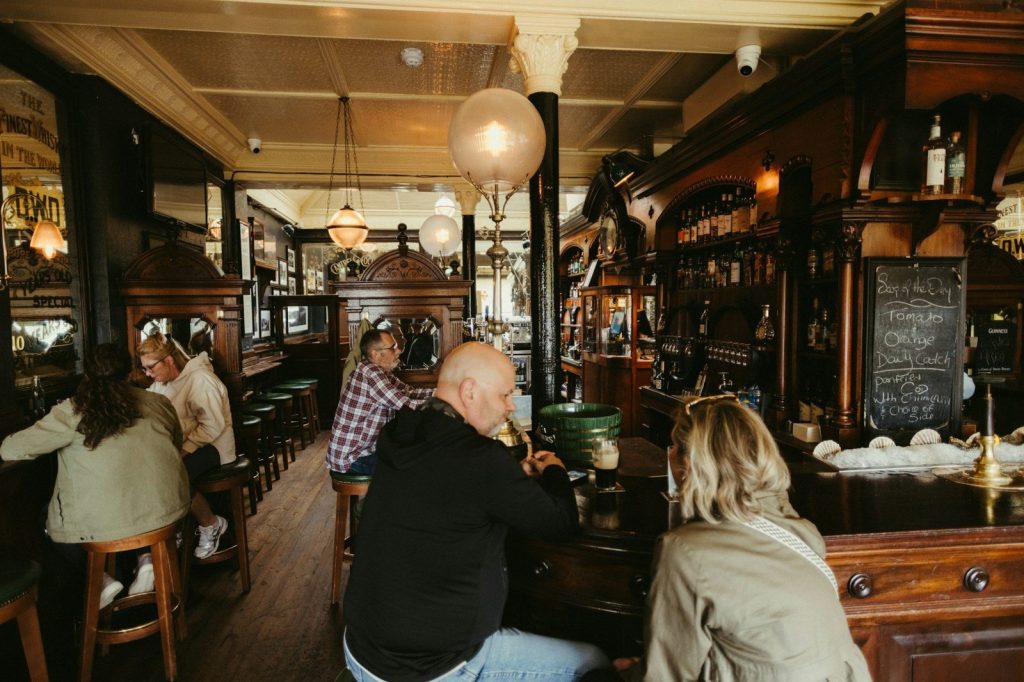
So, how much do bar owners make? The honest range is wide. Published averages run from about $32,000 a year (ZipRecruiter, August 2026) to about $75,000 a year (Toast), and one bar consultant puts it at “anywhere from $0 to $150K+.” The cleaner way to think about it: most bars keep about 10% to 15% of sales as net profit, and what you take home is that profit plus whatever you pay yourself for working the bar. This guide shows you the math so you can run it on your own bar.
If you’re still at the “what will this cost me” stage, start with our breakdown of how much it costs to open a bar. Then come back here for the other side of the ledger.
How much do bar owners make? The published numbers
Here’s what the sources we checked actually say. They measure different things, which is why they don’t match.
| Source | What it says |
|---|---|
| ZipRecruiter | $31,924 average; $36,000 at the 75th percentile; $47,500 for top earners (90th percentile) |
| Toast | $74,791 a year average owner salary (about $6,247 a month) |
| BinWise | “Just shy of $40,000” a year, based on about $330,000 in annual sales |
| Barmetrix | “Anywhere from $0 to $150K+” a year |
Treat these as a rough starting range, not a promise. They’re averages across very different bars, and a lot of new owners pay themselves little or nothing in the first year while the bar finds its feet.
Why the numbers are all over the place
Three things make “bar owner income” a slippery number:
- Salary vs. profit. Some figures count only the paycheck an owner draws. Others count the bar’s whole profit. If you own the bar outright, both are yours.
- Working owner vs. hands-off owner. An owner who bartends four nights a week is earning a wage for that work. An owner who hires a full management team pays that wage to someone else, so more of the profit goes to staff.
- One bar vs. several. Owners who stack a second or third location can earn far more than any single-bar average. Most averages blend all of them together.
So instead of chasing one magic number, figure out what your bar can make. That comes down to sales and margin.
The simple math: sales times net margin
Here’s the core formula:
Owner take-home ≈ what you pay yourself + (annual sales × net profit margin)
For the margin part, Toast and BinWise both put the average bar net profit margin at about 10% to 15%. Barmetrix says most bars run 10% to 20%. For sales, both Toast and BinWise cite an average of about $27,500 a month, or $330,000 a year.
Run those together and you get this. It’s just arithmetic on the published ranges, so use it to see the shape of things, not as a forecast:
| Annual sales | At 10% net | At 15% net |
|---|---|---|
| $250,000 | $25,000 | $37,500 |
| $330,000 (cited average) | $33,000 | $49,500 |
| $500,000 | $50,000 | $75,000 |
| $1,000,000 | $100,000 | $150,000 |
Two things jump out. First, sales volume matters more than anything. A bar doing $1 million at a 10% margin keeps more than a bar doing $330,000 at 15%. Second, the $33,000 to $49,500 you get at the cited average lands in the same neighborhood as the ZipRecruiter and BinWise figures above.
How bar owners actually get paid
Profit on paper isn’t cash in your pocket until you move it out of the business. Owners usually get paid in one or more of these ways:
- A salary or wage. You’re on payroll like everyone else. If your bar is set up as an S corporation, the IRS says officers who work in the business should be paid reasonable compensation as wages before taking other distributions.
- An owner’s draw. Common for sole proprietors and many LLCs. You pull money out of the business as it’s available.
- Profit distributions. What’s left after costs, split among owners based on how much each one owns.
Which one fits depends on how your bar is structured, and the tax side varies a lot. Talk to a CPA before you pick. It’s also worth deciding your structure early, because it shapes how (and how much) you can pay yourself later.
One useful benchmark for the “what should I pay myself” question: the U.S. Bureau of Labor Statistics reports a median annual wage of $69,390 for food service managers (May 2025). That’s roughly what it could cost to hire someone to run the floor so you don’t have to. If you’re doing that job yourself, part of your income is really a manager’s wage, and the rest is your return as the owner.

What drives how much a bar owner makes
Same sales, very different take-home. Here’s where the gap comes from.
1. Pour cost
Pour cost is what your drinks cost you divided by what you sell them for. Toast calls 18% to 20% the industry standard. It also gives an example of two bars that each sell about $1 million a year: the one running a 20% pour cost makes about $100,000 more in profit than the one running 30%. That’s the single biggest lever most owners control. Our guide on how to price cocktails walks through it, and the free Pour Cost Calculator does the math for you.
2. Prime cost (drinks plus labor)
Prime cost is your cost of goods plus labor. Barmetrix recommends keeping it below 65% of sales. Whatever’s left has to cover rent, utilities, insurance, repairs and your paycheck, so every point you save here shows up in what you take home.
3. Loss and variance
Variance is the gap between what your inventory says you poured and what you actually sold. Over-pours, spills, comps and missing bottles all live here. In one Barmetrix case study, a Georgia live music venue cut its variance from 22.1% to 4% and got about $9,300 a month back. A weekly inventory count is how you catch it.
4. The kind of bar you open
Format changes the margin. The Irish Pub Company puts dive bars around 5% to 10%, specialty bars like wine bars around 15% to 25%, and upscale bars at 20% or more, with premium pricing doing a lot of the work. A lower margin can still pay well if the volume is there.
5. Your rent and your hours
Rent is a fixed cost you pay whether it’s a slow Tuesday or a packed Saturday, so a lease that fits your realistic sales is a big deal. And the more shifts you work yourself, the less you spend on labor. That money still counts as income, you’re just earning it behind the bar.
Want this done for you?
The Bar Launch Plan ($29) gives you the Startup Budget Calculator, the Pour Cost Calculator and a business plan template (Word + PDF) so you can model your own sales, costs and owner pay, plus the rest of the 10-file plan: Start Here guide, launch checklist, business structure guide, permits roadmap + permit tracker and insurance cheat sheet.
A worked example
Barmetrix shares a sample bar snapshot that’s handy for seeing how the pieces fit:
- Sales: $45,000 a month
- Prime cost (drinks + labor): $29,000 a month
- Fixed costs (rent and the rest): $10,000 a month
- Profit before tax: about $6,000 a month
That’s roughly a 13% margin, or about $72,000 a year before tax. Now ask the owner questions:
- Is the owner already on that $29,000 labor line? If so, the owner gets a wage plus the $72,000.
- If not, is the owner working shifts for free? Then that $72,000 is really wage and profit rolled together.
- Is there a loan payment? Loan principal comes out of profit before you can spend it.
- Are there partners? Split the profit by ownership share.
Run your own numbers through those same questions and you’ll have a much more useful answer than any national average.
How long before a bar owner gets paid?
Often longer than people expect. Barmetrix says most bars take 12 to 24 months to break even, and recommends having at least 6 to 12 months of operating runway and adding at least 20% to your opening budget as a buffer. Its own sample snapshot (the one above, on a $350,000 build-out) works out to about 59 months to pay back.
That’s why planning your personal runway matters as much as the bar’s. Know how many months you can cover your own bills before the bar pays you a dime. Our step-by-step guide to opening a small bar covers how to keep that build-out lean.
Estimate your own take-home in 5 steps
- Guess your weekly sales honestly. Count seats, realistic turns and average check for each night of the week. Slow nights count too.
- Multiply by 52. That’s your annual sales estimate. Knock off a bit for the slower first months while people discover you.
- Apply a conservative margin. Use the low end of the published range (about 10%) for your first pass. If the bar only works at 20%, that’s a warning sign.
- Decide your role. If you’ll work shifts or run the floor, put a wage for yourself on the labor line. If you won’t, budget for the person who will.
- Subtract loan payments and split with partners. What’s left is your realistic owner income for a year that goes to plan.
Do this before you sign a lease. If the number you land on won’t cover your own bills, change the plan (smaller space, cheaper rent, more volume) while it’s still cheap to change.
How to make more as a bar owner: a checklist
- Cost every drink on the menu and set a target pour cost before you open.
- Count inventory weekly and track variance, not just sales.
- Keep prime cost under your target (Barmetrix suggests below 65%).
- Pick a lease your realistic sales can carry, not your best-case sales.
- Decide your business structure early and talk to a CPA about how you’ll pay yourself.
- Build a 12-month budget with a personal runway line for you.
- Add a 20% cushion to your opening budget.
- Grow volume with events, private buyouts and slow-night promos.
- Review your P&L every month and fix the biggest leak first.
Want a head start? Grab the free Bar Starter Kit below.
FAQ
How much do bar owners make a year?
Published averages range from about $32,000 (ZipRecruiter) to about $75,000 (Toast), with some owners earning nothing early on and others earning $150,000 or more. Your number depends mostly on your sales, your net margin and whether you also pay yourself a wage.
What is the average profit margin for a bar?
Toast and BinWise both put the average bar net profit margin at about 10% to 15%. Barmetrix says most bars run 10% to 20%. Format matters: dive bars tend to run lower and upscale or specialty bars higher.
Is owning a bar profitable?
It can be. Drinks carry high gross margins, but rent, labor, loss and slow nights eat into that. Bars that control pour cost, prime cost and variance, and pick a lease their sales can carry, have the best shot at strong profit.
How do bar owners pay themselves?
Usually through a salary or wage, an owner’s draw, profit distributions, or a mix. The right setup depends on your business structure. If your bar is an S corporation, the IRS expects officers who work in the business to take reasonable compensation as wages. Talk to a CPA before you decide.
How long does it take a bar to become profitable?
Barmetrix says most bars take 12 to 24 months to break even. Plan for at least 6 to 12 months of operating runway and a cushion on your opening budget so you’re not forced to make rushed decisions.
Your next step
Run the numbers on your own bar this week. The $29 Bar Launch Plan gives you 10 files: Start Here guide, business plan template (Word + PDF), launch checklist, business structure guide, permits roadmap + permit tracker, insurance cheat sheet, Startup Budget Calculator and Pour Cost Calculator. 30-day money-back guarantee.
