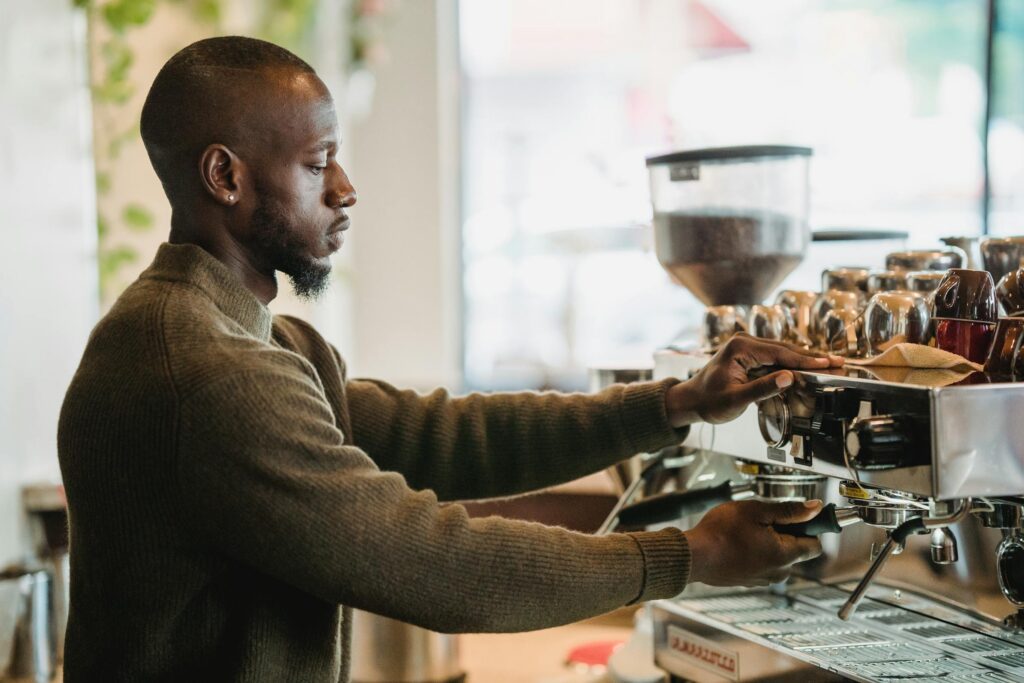
So you want to know how to open a coffee shop. Maybe you have been dreaming about it for years. Maybe you just had one too many bad lattes and thought, “I could do better than this.” Either way, you are in the right place. This guide walks through how to open a coffee shop step by step, the same way I would map it out if you sat across from me with a notebook and a deadline.
I am Dustin. I was the CMO at Dickey’s Barbecue Pit and I have helped launch more than ten restaurants. Coffee is its own animal, but the bones of opening any food business are the same: concept, plan, money, permits, location, build-out, menu, team, marketing, open. We are going to hit all of it. No fluff, no theory, just the real moves in order.
Here is the honest version up front. Opening a coffee shop is not hard because the work is complicated. It is hard because there are a lot of moving parts and most people do them out of order, run out of cash, and stall. Do them in order and keep reserve cash, and you are ahead of most of the people who tried before you.
How to Start a Coffee Shop: The 10 Steps in Order
If you came here searching for how to start a coffee shop, this is the short version. Ten steps, in the order that keeps you solvent. Everything below the list is those same ten steps with the detail filled in, so skim this, then drop into whichever one you are actually stuck on.
- Pick a concept and a niche. Decide what kind of shop you are and who it is for before you look at a single space.
- Write a real business plan. Not a pitch deck. The document that proves the numbers work.
- Price the build and find the money. Get to a total number, then fund it in a way that leaves you reserve cash.
- Start permits, licenses and your legal setup. Begin this early. It is the slowest step and it gates everything after it.
- Find the location and negotiate the lease. Rent is the one cost you cannot fix later, so this is the highest-stakes signature you will make.
- Design the space and buy equipment. Workflow first, aesthetics second. Put the money into the espresso machine and the grinders.
- Build the menu and set pricing. Small, fast, and priced against your real rent and payroll.
- Hire and train baristas. Hire before you need them and train before you open, not during.
- Brand it and market before the doors unlock. On day one you should already have regulars waiting.
- Run a grand opening that builds momentum. Week one sets the habit. Plan it like a launch, not a ribbon-cutting.
That sequence is the real answer to how to start a coffee shop without running out of money halfway. Most people who set out to start a coffee shop and stall did the work out of order: signed a lease before pricing the build, or ordered equipment before the health department had seen a floor plan. Finish steps one through four before you spend real money and you have already dodged the two most common ways this goes wrong.
Step 1: Nail Your Coffee Shop Concept and Niche
The biggest mistake when figuring out how to open a coffee shop is skipping this step. “A coffee shop” is not a concept. Your concept is the answer to one question: why would someone walk past three other cafes to come to yours?
Pick a lane and own it. A few that work:
- Neighborhood third place. The spot between home and work where regulars camp out. Comfort, wifi, community.
- Specialty coffee bar. Single origin, pour-over, baristas who know the farm. Premium pricing, coffee-first crowd.
- Drive-thru speed shop. Volume and convenience. Smaller footprint, faster ticket times, commuter traffic.
- Coffee plus food. Breakfast, pastries, lunch. Higher average ticket, more kitchen complexity.
Your concept drives every decision after this: how big the space is, how much equipment costs, who you hire, and what you charge. Get it wrong and everything downstream wobbles. Write your concept in one sentence before you spend a dollar.
Step 2: Write a Real Coffee Shop Business Plan
A coffee shop business plan forces you to answer the hard questions before they cost you money. How much is rent? What is your margin on a latte? How many cups do you have to sell on a slow Tuesday just to break even? If you cannot answer those, you are not ready to sign a lease.
The SBA has a free business plan template that gives you the bones. Then go deeper on the coffee-specific math in our full coffee shop business plan guide, which breaks it down section by section with a downloadable template.
The part most first-timers skip is the unit economics. Know your margins cold. Across the industry, coffee shops run roughly 75 to 80 percent gross margin on drinks but only single-digit-to-mid net margins after rent, labor, and waste. We pulled the real numbers apart in our coffee shop profit margin breakdown. Read it before you set a single price.
Step 3: Figure Out What It Costs and How You Will Fund It
Money kills more coffee shops than bad coffee. Here are realistic all-in startup ranges by format:
- Lean drive-thru or kiosk: $80K to $200K.
- Standard sit-down cafe: $200K to $450K.
- High-end specialty build: $450K to $750K and up.
Not sure which of those formats is yours? Our free coffee shop concept quiz matches your budget, experience, and market to a format in about two minutes, and shows you the startup range for the one it picks.
Those are wide ranges because location, build-out, and equipment swing them hard. We itemize every line in our full cost to open a coffee shop guide so you can build a number for your specific situation instead of guessing.
One rule that is not optional: keep three to six months of operating cash in reserve, separate from your build budget. That reserve is oxygen. New shops almost never hit their revenue projection in month one, and the ones that survive are the ones that can keep paying rent and payroll while the regulars build up.
Funding usually comes from some mix of personal savings, an SBA-backed loan, a bank line of credit, or investors. SBA loans tend to have the friendliest terms for a first shop, but they take time, so start that paperwork early.
Step 4: Handle Permits, Licenses, and Your Legal Setup
This is the unglamorous step that quietly delays openings for months when people start it late. Begin it the day you decide you are serious. The typical checklist for how to open a coffee shop legally:
- Business entity (an LLC is the common choice for a single shop)
- Federal EIN, which you can get free from the IRS
- Local business license
- Health department permit and inspection
- Food handler and food manager certifications
- Sales tax permit / seller’s permit
- Sign permit
- Certificate of occupancy
- Liquor license, only if you plan to serve alcohol, and it has a long lead time
Set up your entity and grab your tax IDs first. The SBA walks through exactly which numbers you need and where to get them in its guide to federal and state tax ID numbers. For the food-safety side, your local health department writes the rules, but they are almost always built on the FDA Food Code, so reading it tells you what inspectors will look for.
Call your city’s planning and health departments before you sign a lease. The wrong building, zoned the wrong way, can make a great location impossible to permit. Better to find out for free than after you have paid first and last month’s rent.
Step 5: Find a Location and Negotiate the Lease
Location is the one decision you cannot fix later. What you want: high foot traffic, easy parking, visibility from the road, and complementary neighbors. A coffee shop next to a gym, an office building, or a transit stop has a built-in morning rush. A coffee shop tucked behind a building nobody walks past is fighting gravity every day.
Then negotiate the lease like it matters, because it is your single biggest fixed cost. Things to push for:
- Tenant improvement allowance: $20 to $80 per square foot toward your build-out.
- Free rent during construction: three to six months while you cannot operate.
- Exclusive use clause: the landlord cannot lease to another coffee shop in the same center.
- Renewal options: lock in your right to stay before you spend $200K building the place out.
Hire a tenant rep broker. They are paid by the landlord side, so they cost you nothing, and a good one earns their keep in the first negotiation.
Working through these steps right now?
The free Coffee Shop Starter Kit turns steps one through four into a checklist you can actually work: concept, plan, budget, and the permits to start chasing first.
Step 6: Design the Space and Buy Your Equipment
Now you build it out. Design for flow first: where the line forms, where people order, where they pick up, where baristas move. A bad layout slows every single ticket for the life of the shop.
Your core equipment and rough costs:
- Espresso machine: $8K to $25K
- Grinders: $1.5K to $4K each (you want at least two)
- Drip brewer: $1.5K to $5K
- Refrigeration: $5K to $15K
- POS system: $1.5K to $3K
- Furniture: $5K to $25K
- Smallwares: $3K to $7K
Spend your money where the customer tastes it: the espresso machine and the grinders. Cheap out there and every drink suffers. For the full itemized breakdown of what to buy and what each piece costs in 2026, work through our coffee shop equipment list before you call a single vendor.
Ready to skip the guesswork? The Opening Day Coffee Shop Kit gives you the startup budget calculator, the drink cost calculator, the pricing strategy guide and the permits and licensing roadmap in one download, so you are working from real templates instead of a blank page.
Get the Free Coffee Shop Starter Kit
Menu and margin cheat-sheet, startup budget calculator, and a printable worksheet. Free, no strings.
Step 7: Build Your Menu and Set Pricing
Keep the menu tight. A few espresso drinks done perfectly beats forty mediocre options. Decide your core drinks, your food strategy (none, pastries only, or a full kitchen), and then price for profit, not for what feels nice.
Most new owners underprice and bleed out slowly. Aim for a food and beverage cost around 25 to 30 percent. A latte that costs you about $1.50 in ingredients should sell for $5 to $6. That gap is what pays your rent and your team. If that feels expensive, remember the customer is buying the seat, the wifi, the vibe, and the barista who remembers their name, not just the milk and beans.
Step 8: Hire and Train Your Baristas
Hire for personality, train for skill. You can teach someone to pull a shot in two weeks. You cannot teach them to be warm to a stranger at 6 a.m. Your baristas are the face of the brand, so hire the people customers will come back for.
Run a two-week onboarding: week one is coffee fundamentals, week two is everything else, from the POS to closing procedures. Pay above market for your area. Turnover is brutally expensive once you count rehiring and retraining, and a stable team is what turns first-timers into regulars. Document every recipe and procedure so quality does not walk out the door when someone quits.
Step 9: Brand It and Build Pre-Opening Marketing
Your brand is the name, logo, color palette, cups, website, Google Business Profile, and Instagram. It should be consistent everywhere a customer sees you. This is the part I lived in as a CMO, so hear me on this: marketing does not start on opening day. It starts months before.
Still short a name? Our free coffee shop name generator spins names around your concept and shows you whether the Instagram handle and the domain are still open before you fall in love with one.
Pre-opening moves that actually work:
- Start building an email list the day your sign goes up
- Partner with nearby businesses to cross-promote
- Do a soft open for local influencers and friends-and-family
- Get on local press and neighborhood Facebook groups
- Claim and optimize your Google Business Profile early so you rank in local search
Step 10: Plan a Grand Opening That Builds Momentum
Your grand opening is a campaign, not just flipping a sign from closed to open. Count down on social media for a couple of weeks. Run a friends-and-family soft open to shake out the kinks before real customers arrive. Then make opening week memorable: free drinks for the first 100 customers, live music, a local pop-up, anything that gives people a reason to show up and post about it.
The goal of opening week is not one big day. It is turning a crowd of curious first-timers into a base of regulars who come back every week. That base is the whole business.
How Much Does It Cost to Open a Coffee Shop?
Quick recap on the money, because it is the question everyone asks. A lean drive-thru or kiosk runs $80K to $200K. A standard sit-down cafe runs $200K to $450K. A high-end specialty build runs $450K to $750K and up. On top of your build budget, keep three to six months of operating cash in reserve. For a full line-by-line estimate you can adapt to your city, work through our cost to open a coffee shop guide.
Final Thoughts on How to Open a Coffee Shop
Opening a coffee shop is one of the most rewarding businesses you can build. It is also one of the easiest to stall on, because there are a dozen steps and most people run them out of order or out of cash. You now have them in order: concept, plan, money, permits, location, build-out, menu, team, marketing, open.
Pick a date for opening day, write it down, and work backward. Everything in this guide becomes a task on that timeline. The Opening Day Coffee Shop Kit gives you the startup budget calculator, the drink cost calculator, the pricing strategy guide, the permits and licensing roadmap and the launch checklist, so you are not starting from a blank page. It sits alongside the other startup kits if you are still choosing which food business to open.
You have got this. Now go open your shop.
This guide is for general information and is not financial, legal, or tax advice. Costs, permits, and licensing requirements vary by state and city. Confirm the rules for your location with your local authorities and a licensed professional before you commit money.
Frequently Asked Questions About How to Open a Coffee Shop
How much does it cost to open a coffee shop?
It depends on format. A lean drive-thru or kiosk runs roughly $80K to $200K, a standard sit-down cafe $200K to $450K, and a high-end specialty build $450K to $750K and up. Always keep three to six months of operating cash in reserve on top of your build budget.
Do you need a license to open a coffee shop?
Yes. At minimum you typically need a business entity, a federal EIN, a local business license, a health department permit, food handler certifications, a sales tax permit, a sign permit, and a certificate of occupancy. A liquor license is only needed if you serve alcohol. Requirements vary by city and state, so confirm with your local authorities.
Is a coffee shop profitable?
Coffee shops run high gross margins on drinks, often 75 to 80 percent, but net margins are slimmer after rent, labor, and waste, typically in the single-digit to mid range. Profitability comes down to volume, pricing discipline, and controlling labor and rent. See our coffee shop profit margin breakdown for the real numbers.
How long does it take to open a coffee shop?
For most first-time owners it takes six months to a year from decision to opening day. Permits, lease negotiation, and build-out are the slowest pieces. Starting your entity setup and permit applications early is the single best way to avoid delays.
How do you start a coffee shop from scratch?
Work the ten steps in order: concept, business plan, costs and funding, permits and legal setup, location and lease, design and equipment, menu and pricing, hiring, pre-opening marketing, and the grand opening. The sequence matters more than the speed. People who start a coffee shop successfully finish the planning and permit work before they sign a lease or buy equipment, and they keep several months of reserve cash for the stretch after opening day when revenue is still ramping.
What equipment do you need to open a coffee shop?
The core list is an espresso machine, at least two grinders, a drip brewer, refrigeration, a POS system, furniture, and smallwares. Spend your money on the espresso machine and grinders, since that is what the customer tastes. See our full coffee shop equipment list for itemized 2026 costs.
Get the Free Coffee Shop Starter Kit
Menu and margin cheat-sheet, startup budget calculator, and a printable worksheet. Free, no strings.
